The Real Difference Between 2Ah and 4Ah Batteries
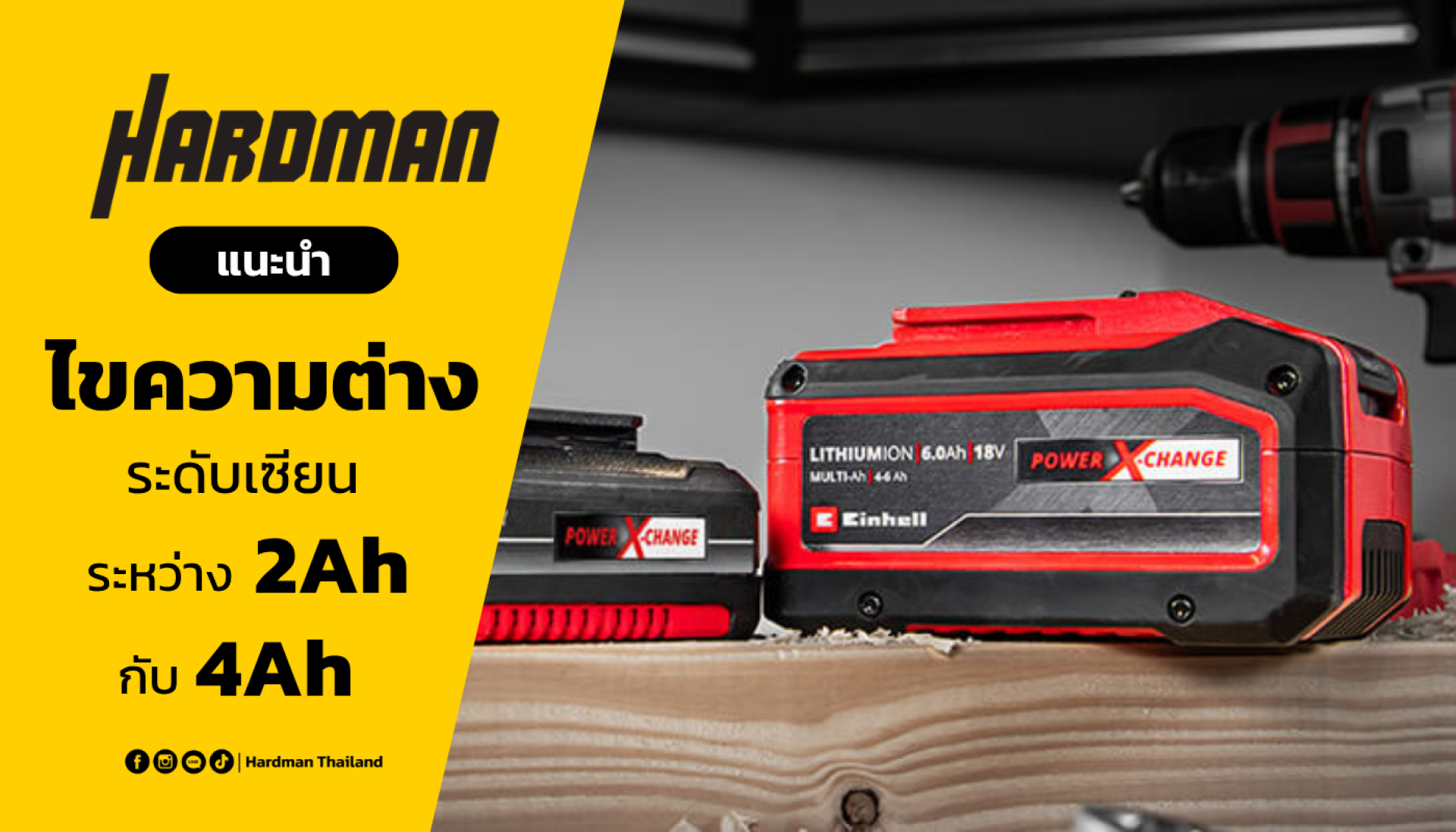
Pro-Level Breakdown: 2Ah vs 4Ah Batteries – Which One Suits Your Power Tools?
When shopping for cordless power tools, the heartbeat that determines how long your tool runs—and how hard it hits—is the battery.
Most of us often see numbers like Ah (Ampere-Hour) stamped on battery packs, such as a 2Ah battery or a 4Ah battery. That usually brings up a common question: "Since the voltage is the same (like 18V or 20V), why is the 4Ah battery so much more expensive? Is the 2Ah vs 4Ah battery difference really just about runtime?"
If we open up the casing and look at the internal wiring, you'll instantly see that comparing 2Ah vs 4Ah batteries reveals differences far beyond just runtime and capacity.
What Does Ah Mean in 2Ah vs 4Ah Batteries?
If you compare a cordless power tool to a car, the Voltage (V) is like the engine's horsepower, while the Ah (Ampere-Hour) is the "size of the gas tank."- 2Ah Battery: Think of it as a small gas tank. It's lightweight, comfortable to lift, charges up super fast, but if you run it continuously, the juice drains out quickly.
- 4Ah Battery: Think of it as a large gas tank. It keeps you running twice as long, but you trade it for a bulkier and heavier pack.
Looking Inside the Casing: 2Ah vs 4Ah Battery Differences
What many people don’t realize is that 2Ah vs 4Ah batteries pack their internal cells completely differently, which directly affects the torque and overall power of your tool.
1. Different Number of Internal Cells
- 2Ah Battery: Inside, it features just 5 battery cells (usually size 18650 or 21700) wired in a single series string.
- 4Ah Battery: Packs a full 10 cells, split into 2 sets (5 cells each) wired in parallel.
2. Power Output Differences in 2Ah vs 4Ah Batteries
Because a 4Ah battery has two sets of cells working together, when you plug it into high-drain tools, the battery pulls and delivers current smoothly. This prevents voltage drop, letting the tool run at full capacity with maximum torque. A 2Ah battery, featuring only a single cell set, will experience a noticeable drop in power and struggle under heavy loads.
3. Heat Buildup and Lifespan
Batteries hate heat—the hotter they get, the faster they degrade. A 2Ah battery has only 5 cells, so heavy work forces those cells to get overworked and overheat rapidly. A 4Ah battery splits the load across two sets, keeping the pack cooler and making it last significantly longer over the years.
4. Weight and Physical Size
A 4Ah battery with its 10 internal cells is about 30–50% heavier and noticeably thicker than a 2Ah battery. If you're driving screws overhead on a ceiling all day long, a 2Ah battery will save your arms from exhaustion.
Charging Time Comparison for 2Ah vs 4Ah Batteries
Another important aspect to consider when evaluating 2Ah vs 4Ah batteries is the recharging time:- 2Ah Battery: Takes approximately 30–45 minutes to fully charge on a fast charger, making it ideal for quick rotations during light work.
- 4Ah Battery: Requires around 60–90 minutes due to its double capacity, meaning pros should plan their spare battery rotation ahead.
How to Choose Between 2Ah vs 4Ah Batteries for Real Jobs
1. 2Ah Battery (Agile and Hand-Friendly)- Best For: Light-to-medium tasks, general wood/metal drilling, driving drywall screws, assembling furniture, or overhead work on scaffolding.
- Pros: Extremely lightweight, keeps your arms fatigue-free all day, and charges fully in no time.
- Cons: Drains rapidly and overheats when paired with high-draw tools like angle grinders or circular saws.
- Best For: Heavy-duty, continuous tasks requiring high torque, such as rotary hammers, cordless angle grinders, circular saws, or impact wrenches.
- Pros: Runs twice as long without constantly stopping to recharge, delivers zero power drop, and unleashes the motor's full potential.
- Cons: Thick and heavy—definitely not built for all-day overhead screw-driving.
Pro Tips on 2Ah vs 4Ah Batteries Selection
1. Match the Battery to the Tool Type- Low-drain small tools (impact drivers, small drills) Use a 2Ah battery to keep the weight balanced and comfortable.
- High-drain heavy tools (angle grinders, circular saws, rotary hammers) Stick to a 4Ah battery or higher, otherwise the tool's protection circuit will constantly trip.
For general assembly or installation work, having two 2Ah batteries often flows better than one 4Ah battery. You pop one on the tool while the other sits on the charger, keeping you going all day without straining your wrist.
3. Maintenance for 2Ah vs 4Ah Batteries
- Avoid draining the battery completely to 0%.
- Never charge or store lithium-ion batteries in direct sunlight or hot car trunks.
- Allow hot batteries to cool down before plugging them into the charger.
2Ah vs 4Ah Batteries – Which One Should You Buy?
- Choose a 2Ah battery if: You focus on home repairs, DIY projects, furniture assembly, drywall work, or prefer a lightweight tool.
- Choose a 4Ah battery if: You're a professional contractor, working on construction sites, running angle grinders frequently, or want maximum torque without frequent battery swaps.


